



















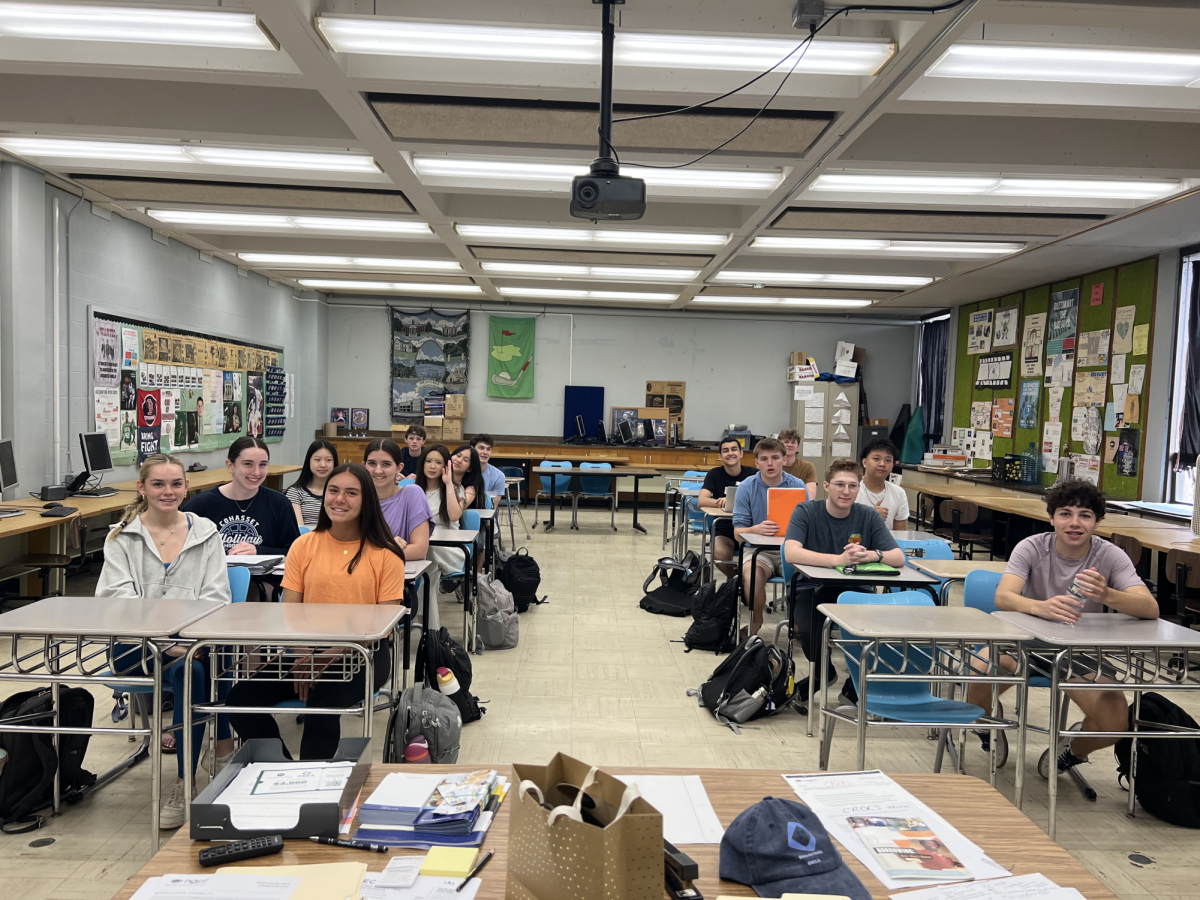
In a world where inflation is taking over and the prices of everyday items are increasing, financial literacy should be a key component in everyone’s lives. Students should understand that handling money is an important part of living because it can set them up for the future. Here at Braintree High, over the course of the 2025-2026 school year, approximately 84 students took the personal finance class out of 1500+. It needs to be a requirement.
According to Junior Achievement of Arizona, only 45% of students in the US took a financial literacy course in high school within the past year. While this number sounds low, it is set to increase as taking personal financial literacy courses are being required in many states to graduate. For example, states like Rhode Island and Georgia have financial literacy included in their curriculum, according to the National Association of State Boards of Education. Although there are no specific stand-alone course requirements in place, financial literacy is woven throughout other courses like economics which can teach skills like spending and saving money. These courses are important to students because they are able to develop proper money-managing skills to use in their adult life.
In Massachusetts, personal financial literacy isn’t a graduation requirement just yet. Although the state encourages students to take a financial literacy course throughout high school, not all students are guaranteed to learn it. This is the case here at Braintree High School. While personal finance is a course offered to students, it is an elective that students can opt to take. Within the past two semesters, there have only been three classes with about 28 students in each. Considering that BHS has over 1500 students, this number is really low.
More BHS students should take financial literacy classes because learning to manage credit, finances, budgets, etc. are important aspects in everyone’s future, no matter if students plan to pursue business or not. Every person will have to deal with bank accounts and debts at some point, so getting a baseline of skills while in high school sets students up to succeed in the future, especially if the students can get an early start on things. This is important regarding investments such as stocks and retirement plans like the 401k and Roth IRA. If students are able to learn about stocks and retirement plans in high school, they could get a head start on putting money aside in investing. Over time, this money accumulates and will be beneficial to use later on in life.
If personal finance classes were required at BHS, students would benefit by learning about how to handle finances and to make responsible decisions in the future, thus leading to a more informed student body. Since students are already required to take art classes and world language classes in order to graduate, then a personal finance graduation requirement could also be implemented. Aspects of personal finance could also be implemented in other classes such as math classes and business classes where students are already learning about similar topics. Overall, it would be beneficial to require the passing of a personal finance class at BHS because students could learn to manage their finances better and to leave high school with a firm grasp on managing money.