
















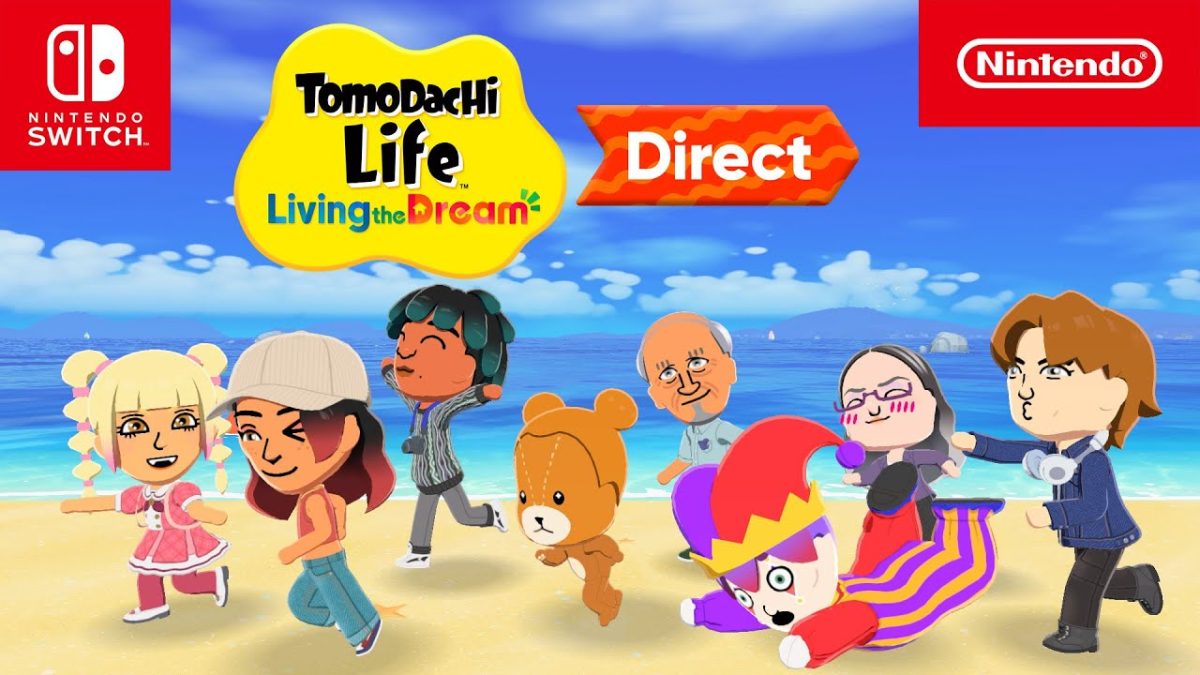



What was originally a small, silly game on the 3DS in 2014 soon became an absolute classic: Tomodachi Life. Over ten years later, after hopes had risen and been dashed again and again, fans were met with the release of the long-awaited sequel for the Nintendo Switch and Switch 2. Tomodachi Life: Living the Dream, released on April 16th, 2026 to massive applause.
The game could be called a life simulator using Nintendo’s Mii characters introduced for the Wii and carried onto later consoles. However, the gameplay is less like The Sims series of life simulators — games where any character’s actions can be controlled — and more like watching sea monkeys in a tank. The player gets very little control over the Miis added into the game, and instead gets to watch as they go about their lives.
Gameplay revolves around the Miis of course, specifically through solving their problems that come up in the form of little multicolored thought bubbles every now and again. This can range from introducing them to a new friend, solving an argument, giving gifts, or even navigating a blooming romance. Alongside this, Miis can also ask to play a variety of minigames for rewards.
For a lot of people, the hook of the game comes from the customization of the Miis, making real friends, family, their favorite fictional characters, and so on. Nintendo continues to experiment with systems, no longer having online Mii sharing like the first entry in the series, as well as replacing the makeup system (from the previous Mii-focused game Miitopia) with facepaint, a system which gives the player a full pixel grid on and around the face of the Mii which can be freely drawn on.
In fact, Tomodachi Life: Living the Dream increases tenfold on player freedom and customization. Players can reshape their entire island, place buildings and objects wherever they want. They can create their own items, homes, and food to give to Miis, and in an unbelievably shocking move from Nintendo, player input to the game’s text boxes have no filter. This is almost entirely because the game has no online features, no sharing Miis through QR codes like before, you can’t even take a screenshot and post it online like with almost any other game on the Switch.
However, like with any sequel, there are parts the original still does better. Namely, the first game had a lot of very charming minigames and island events that are completely absent from the new Switch entry. Not a huge issue, but for a game built on humor and charm, every moment matters.
Overall, Tomodachi Life: Living the Dream is a welcome return to a series many had thought was abandoned, and Nintendo again proves that they have cornered the market on chill, cozy games.