
















On January 24th in Minneapolis, Minnesota, 37 year old Alex Pretti was fatally shot by a federal officer on duty for Immigrations and Customs Enforcements. This shooting occurred only 17 days after the murder of Renee Good by the same federal agency in the same city.
The murders committed by Immigrations and Customs Enforcements, or ICE, sparked massive controversy not just in Minnesota, but across the country. In the Greater Boston Area, students have taken to protesting through walk-outs, announcing that they won’t participate in a society they see as unjust. But are students just using this “activism” as an excuse to skip school? Absolutely not.
Walk-out protests are nothing new to Braintree High Students. In 2021, Braintree made the news with their walk-out in protest against racial slurs and racist behavior in the school. Walk-outs are also a familiar concept to American schools as a whole. They’ve been a part of the country’s history since the 1960s and 70s, when high schoolers defiantly protested the unfair treatment of African-Americans during the Civil Rights Movement, and the Vietnam War during the Anti-War Movement. In 1963, over 1000 students skipped school to attend a protest in Birmingham, Alabama in the fight for Civil Rights.
Fast forward to the current day and Gen-Z is continuing that trend. Gen-Z makes up our high schools and much of our colleges and universities, and they’re the most likely to be politically active. In a survey of 10,000 members of Gen Z, 70% of them identified themselves as being involved in a political cause. While it’s not guaranteed that these beliefs will be liberal, it’s more common for youth to exhibit progressive views compared to their parents and elder relatives. There are many possibilities as to why Gen-Z tends to hold these liberal views. Younger generations aren’t bogged down by long-held values of tradition and conformity. While an older conservative relative may be willing to ignore the actions of ICE due to precedent or a belief that the government knows best, youth are more curious and willing to question established authority, and the disruptive nature of walk-out protests does this well. Protests that cause discomfort are often the most effective as they force people to pay attention who otherwise might be able to turn a blind eye to certain causes.
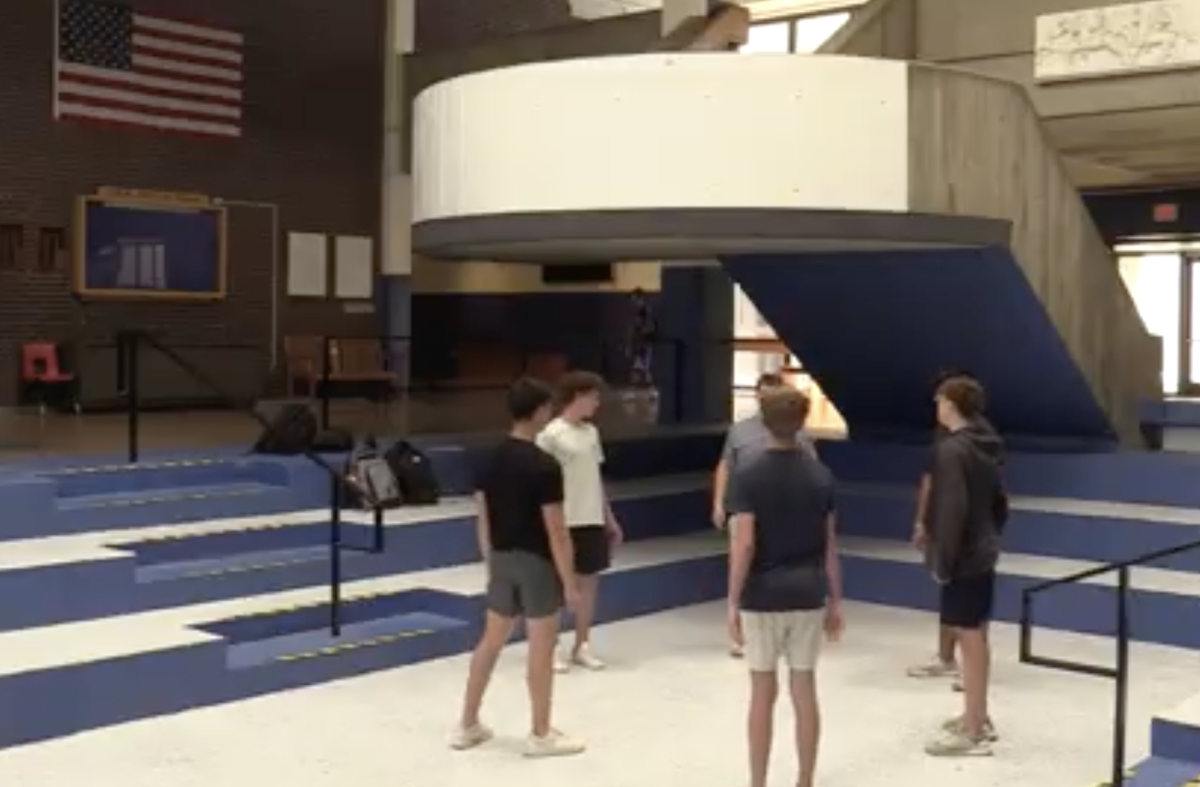
This was exemplified in the nearby town of Belmont on January 30th. While in Boston, a massive “ICE Out” protest was taking place, the students of Belmont High had their own protest. Hundreds of students walked out of their classes around 1:00 as part of a protest against ICE.
Many people argue that the recent up-tick in walk-out protests is simply teens using political activism as an excuse to skip school. While this may be the case for some, as stated before, Gen-Z has always been some of the most politically active and aware. A study by Tufts University demonstrated how youth activism has risen in all forms, not just demonstrations. Between 2016 and 2018, there was a 14% increase in 18-24 year olds who had signed a petition, a 7% increase in those following a political activist on social media, and, of course, a 10% increase in those who reported attending protests and demonstrations. It is not just the disruptive protests that are growing, but smaller forms of protest too. Gen-Z is participating in activism because the cause means something to them, not because they want to get out their responsibilities.
The notion that young people attend walk-outs to skip school does huge disservice to a generation that truly cares, and explains why walk-outs are needed in the first place. In a country that doesn’t respect the opinions of their youth, walking out feels like the only way to get people to listen. Students are the future of the nation, and cannot remain silent during historic moments of injustice. Walk-out protests are not merely an excuse to disobey teachers, they are an essential tool of protest.