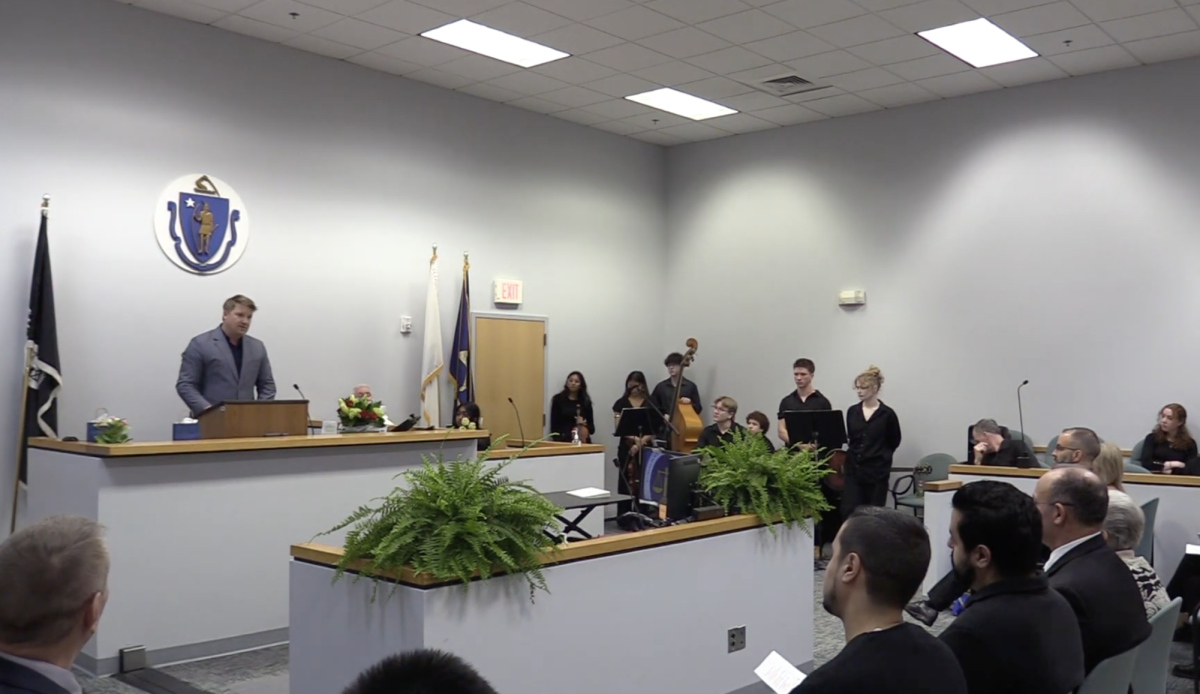
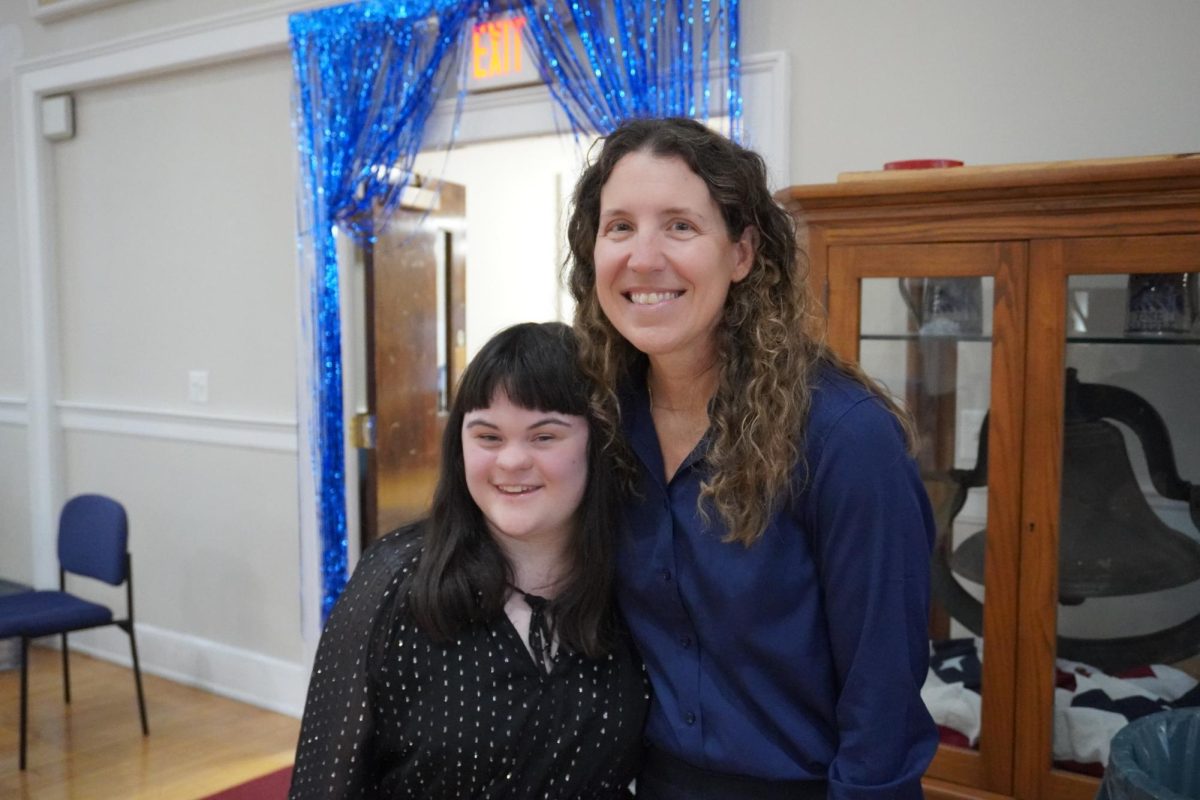








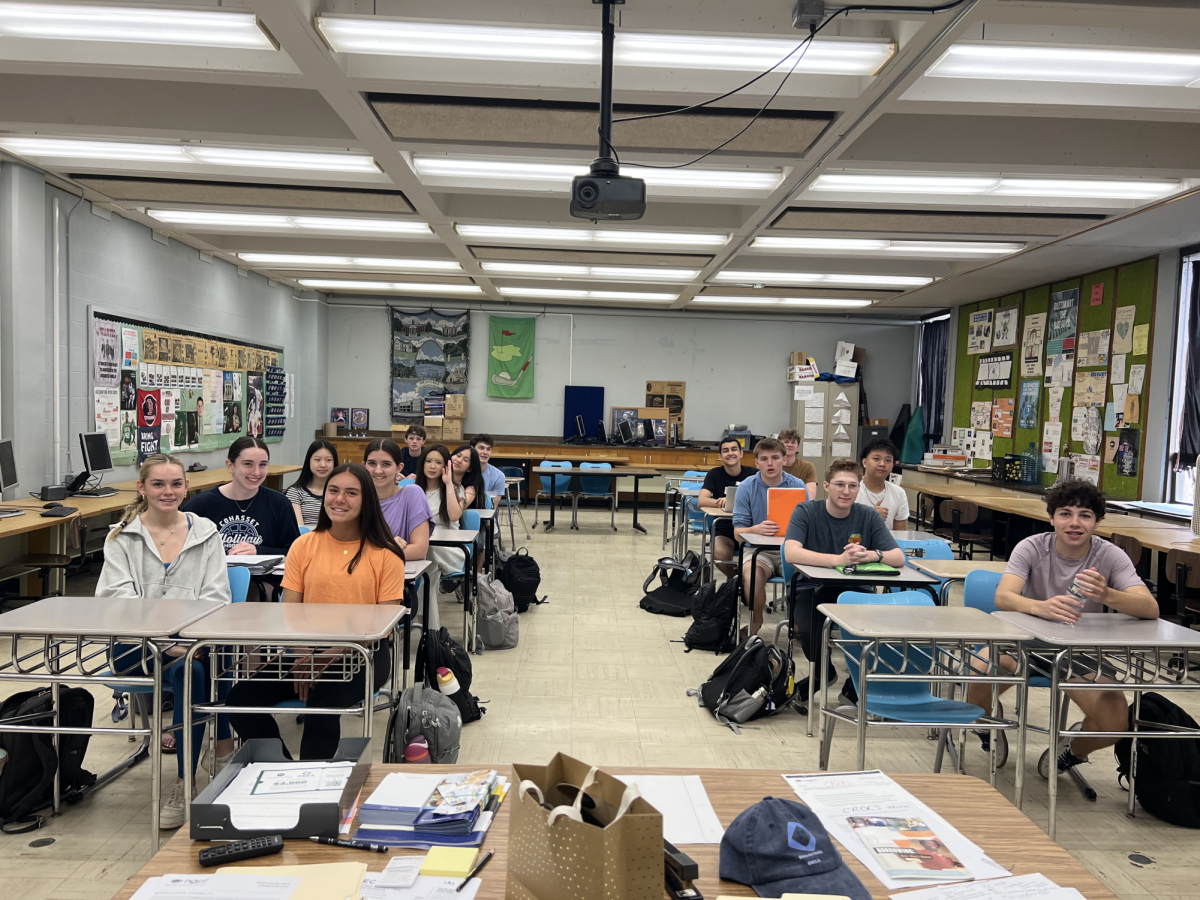










Mayor Erin Joyce was elected in the 2024 mayoral election, challenging and winning against the previous Mayor, Charles Kokoros. But prior to becoming mayor, Joyce was busy raising her kids and working as a part of her civil engineering and land surveying firm in Braintree. Joyce is no stranger to surveying land and civil engineering, as she looks to encourage the development of new housing projects in Braintree, such as the Eastwalk, an upcoming apartment complex being built off Allen Street in East Braintree.
“I think what we’re seeing regionally is that housing is a critical need. For Braintree, it’s really like preserving and protecting the neighborhoods that we have and taking all the commercial spaces that, you know, were warehouses way back when, and now we want them to be something else. So, we’ve designated the Ivory Street corridor from Grossman Plaza Best Buy, all the way down to where Armstrong Cork was for our MBTA communities housing,” explained Joyce.
While Mayor Joyce looks to build these new housing complexes for the town of Braintree, she is hopeful for ways these new complexes can benefit the town.
“So what we’ve been having, you know, what some of the larger scale developers do is they do like a fiscal report and they take all that into consideration. So they say, ‘we’re gonna bring in, say, a million dollars in new tax revenue freedom.’” Joyce highlighted. “But when you factor in the kids and the services that we’re gonna consume, that net tax benefit might be $600,000. So, for the town, most of our money that we spend to fund our services and infrastructure investments are from the property taxes that we collect from businesses and presidents.”
However, the town isn’t the only beneficiary to these new apartment complexes, as Mayor Joyce looks to attract a different group of people to Braintree.
“When you want to attract young families or you want to be able to be a landing place for maybe someone coming out of college who wants to work in your community and live in Braintree. They’re going to need somewhere to live and not everybody can afford a house right away. Not everybody can afford a condo right away. So I think it really is just being able to provide a variety of housing in your community, but also being realistic for what someone’s gonna come to invest and build. And when we look at the actual benefit, whether it’s like a cost benefit, and what is going to be the increase in potential costs for students.”
Lucas Pellegrino, a junior in Braintree and a prospective college student, agreed with Joyce.
“I think housing complexes in general are a positive for any town. They open up more affordable housing to families and by doing so brings in new people to a town. Towns shouldn’t be limited to only those that can buy a house and housing complexes are a solution to that,” said Pellegrino. “They are able to create a close community between the people that live there as well. As someone who plans to go to college, and probably stay at a complex, it seems like a good way to see new people.”
While Mayor Joyce hopes to attract more people to the town of Braintree, she also believes there would be a great benefit to businesses.
“Trying to get housing or people living around our commercial areas, I think can maybe help those those businesses have people at them more continually, so I think those are the areas we’ll work on but I don’t think we’ll be able to not have sort of the pop up, but when you start to get momentum in those other areas, I think the housing will sort of migrate to that area.”
However, the people of Braintree have varying feelings on these new housing complexes, with some viewing it as a hindrance, and others as the next step.
“I do understand why people are always wary of new developments and housing and the potential impacts they could make on a community, but offering affordable housing is a crucial pathway to help citizens break out of the cycle of poverty. The negative assumptions about the individuals who may live in these homes are due to the narrative that people without money are problematic criminals and drug users,” remarked Braintree High English Teacher Ms. Murphy. “I urge the people of Braintree to look at these homes as an opportunity to lead with empathy and the potential to help people who are victims of the growing inequality and resulting housing crisis in this country.”
Braintree Resident and business owner Devin Adams agreed with Murphy’s statement.
“We need to make sure that new builds fit the neighborhood they are in or adjacent to. A place like the landing has a more urban feel, busier and at times louder than most areas, it’s the perfect spot for couples and single people. With the main road and commuter rail a great place for young commuters to Boston to start off in larger/taller apartment complexes,” Adams stated. “If we are looking at more rural or quiet neighborhoods around us we should be developing more transitional townhomes and single families…we want to make sure that we can convert small families that rent to share and build in our community. The taxes that come from real estate are the backbone of small towns and cities like ours. Many people argue new buildings as huge problems to traffic and schools but have to realize they are necessary if you do not want to continually raise taxes, which no one typically wants.”
We attempted to reach out to people who had spoken in opposition to the new apartment complexes online, but were met with no response by those in opposition.
Mayor Joyce shared her insights on why some may view these new developments as a negative.
“I think sometimes it’s hard for people who live in Braintree, in sort of the neighborhoods where that’s how they want to live, you know, a single family house, two cars, five cars, whatever they have, like that’s how they want to live. Sometimes it’s hard to think about why someone would want to live in an apartment and not have a car, but just as much as there are people who want single family homes, there’s people who do want to have no lawn to mow, easy access to the train, [and] not have to pay car payments.”
While many have negative outlooks for these new complexes, Joyce is hopeful for the future of the town.
“I mean, I hope they just bring more friends for us all, right? People shop at our businesses, places for family members whether it’s our kids or our parents to live if needed.”