



















Midterms at BHS: Fair or Outdated? – Josh + John
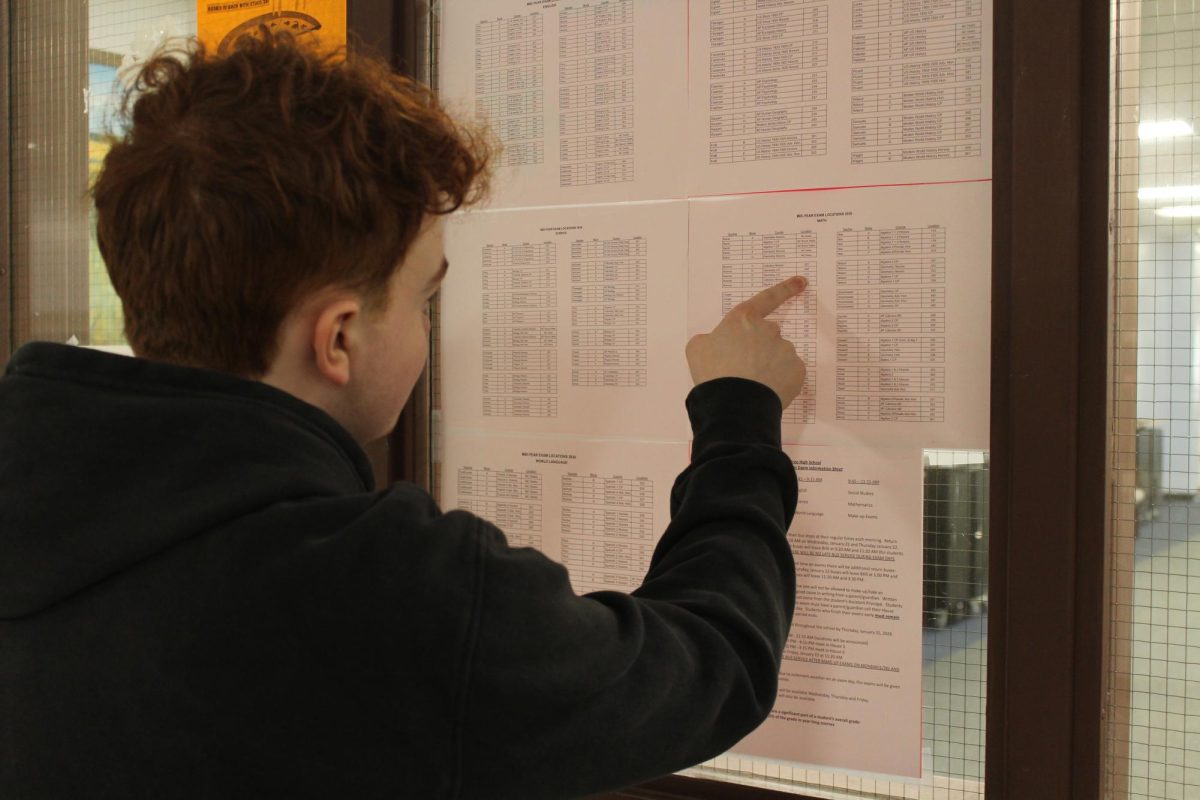
Midterms here at BHS are a staple of the curriculum. They challenge the students’ understanding of the subject as it covers the entire material they have learned so far during the first half of the school year, but over the years the exams have gained their fair share of opposers, critiquing that the test contributes to 10% of one’s entire grade.
One argument in favor of the midterms is that they provide a fair evaluation of a student’s ability to assess information from the course.
“The exams can be challenging, but I do think they have a good purpose and it is a different, but important, skill to be assessed on a broader amount of content,” shared Braintree Public Schools Director of Science, Dr. Clifford.
The midterm exams mark the middle of the school year for students, and assesses all they have learned from their first day of the year until that point, leading to significant studying and review for teachers and students the week prior. At 10% of a student’s grade, the midterm amounts to about 4 weeks worth of work and grades, but it is condensed into just one day.
“The intention of course is that it is a fair assessment and should be similar to other assessments students take. It is a balance between making sure students take it seriously and not weighting it too heavily. This grading formula hasn’t been updated for some time—aside from modifications during Covid—and it is a conversation I would enjoy being part of to make sure our current model aligns with that balance,” Dr. Clifford said.
The Massachusetts K-12 education system was standardized in 1993 with the Mass Education Reform Act (MERA), establishing a set system for state education and the creation of new ways of testing students, such as the MCAS. Despite drastic changes to the system, the midterm tests remained untouched, remaining the staple of the education system they have been for hundreds of years.
Dr. Clifford explained, “The mid-year exam is a good check-in for students to show what they know and understand for each of their classes. Students are able to put concepts from the semester together or answer questions about various units separately depending on the format of the exam. It shows what students have really retained and understand rather than cramming about some specific information and later forgetting.”
Despite their appeal to the education system, students are the ones taking the test, and of course, student opinions vary on the necessity of the test.
“It’s a pretty stressful time for students, but it’s necessary, and you got to push through keep working,” said BHS senior Joshua Linker.
“I feel pretty nervous because I don’t feel very prepared for it. We haven’t really started preparing cause we’ve been learning new material,” replied senior Brady Ung.
These feelings are fully expected, with educators understanding the toll such a large test takes on a student’s mental state.
“I would never attempt to speak for a student but I’d expect to hear some concern over preparation or stress of taking the exams themselves from students. I know that break with half days between semesters can be a nice lull though. I would be interested to hear more from students with constructive feedback about how to make the structure for exams or actual assessments themselves better,” Dr. Clifford expressed.
Students all find the exam challenging in their own way, leading to unique solutions on how to create a more user friendly method for testing.
“I would make it more up front what exactly is going to be on the test, how it will be structured, what is the multiple choice, what is the open response, and just make it more clear exactly what units will be on it,” Joshua Linker stated.
“I liked the Spanish midyears where it used to be spaced out instead of one big test. I think it should contribute to 5% because some people aren’t good at testing,” said senior Shane Griffiths.
Despite these differing opinions, all students seemed to agree on the fairness of the midterm exams as a method of testing their knowledge.
“I think it is fair, but it can definitely hurt your grade if you don’t prepare,” said senior Liam Sweeney.
“I think for the most part I am prepared for them. I find it fair,” replied senior Lincoln Ferrell.
“I think that it’s fair, it’s a big exam, and there is quite a lot of time to prepare for it. It also shouldn’t be that hard if you have been paying attention in class,” Brady Ung said.
Despite constant changes in the education system from ever present budget cuts and layoffs which have reshaped the school landscape over the last few years, the midterm remains a constant which provides a fair, yet challenging, way to assess students’ knowledge.
Dr. Clifford finalized, “There have been conversations about the format over the years but in general, there haven’t been big changes during that time. From a science perspective, we’ve been working to shift the exams to be more application-based. Some courses have made more changes than others. The exams can be challenging but I do think they have a good purpose and it is a different, but important skill to be assessed on a broader amount of content.”
How Midterms Impact Students – Kalina
Midterms are an extremely stressful time for students, as the pressure and stress of balancing extensive studying for these exams, meeting deadlines, and leaving time for extracurricular activities takes a toll on students’ personal well-being.
A few students have talked about how midterm exams significantly affect their mental health inside and outside of the classroom.
“I feel like midterms is a lot more prep and study because it’s everything I have learned up until this point and not like regular tests since it’s focused on multiple units and not just one concept,” said senior Emma Gerry, who is currently doing her last year of midterm exams.
Along with students’ mental health being affected during midterms season, their physical health also is impacted whether it revolves around sleeping problems, and heightened fear of the upcoming exam.
“The stress you have consumes your mind,” said sophomore Sadie Riley, who is currently in her second year of taking midterms exams. “The more stressed you are, the less motivation you have because you’re too busy worrying. It’s harder to sleep but you’re too consumed by your studying.”
Students are often seeking help for their mental and physical health, and how they can manage themselves better, so they shared some of their resources they use to prepare themselves and not feel or act poorly during this time.
“I like to take five minute breaks between 30 minute periods so I can study intensively but give my mind breaks,” said sophomore Makir Bonhomme, currently in his second year of taking midterm exams. “I always prioritize going to my teachers for support as I know I can turn to them at any moment with any specific questions about certain topics.”

Nirmay Gupta • Jan 21, 2026 at 7:09 pm
Well-balanced article with great and impartial perspectives from both sides!